
-
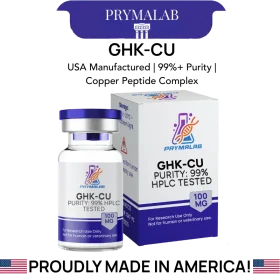
GHK-CU 100MG
$39.99 or subscribe for $32.99/mo This product has multiple variants. The options may be chosen on the product page -

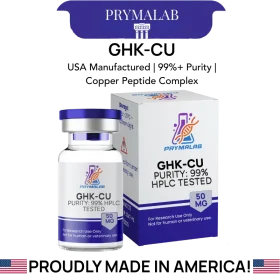
GHK-CU 50MG
$19.99 or subscribe for $16.99/mo This product has multiple variants. The options may be chosen on the product page -
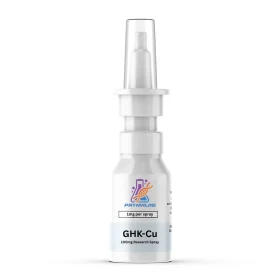
GHK-Cu Nasal Spray
$59.99 or subscribe for $49.99/mo This product has multiple variants. The options may be chosen on the product page -
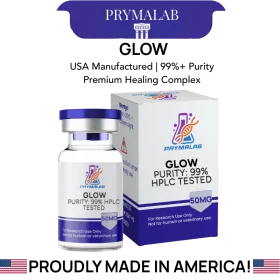
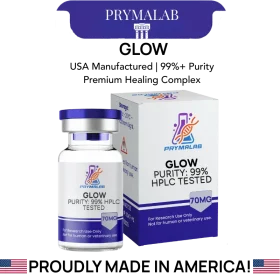
GLOW BLEND 50MG
$99.99 or subscribe for $84.99/mo This product has multiple variants. The options may be chosen on the product page -
GLOW BLEND 70MG
$159.99 or subscribe for $135.99/mo This product has multiple variants. The options may be chosen on the product page -
Sale!
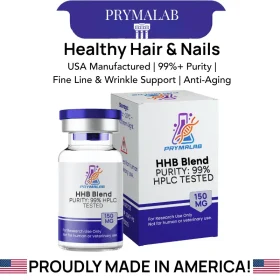
HHB Peptide (Healthy Hair & Nails Blend)
$34.95 or subscribe for $24.99/mo This product has multiple variants. The options may be chosen on the product page -
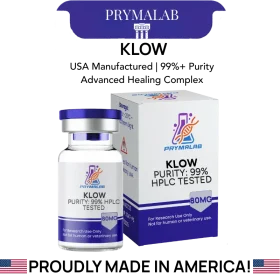
KLOW Blend (80mg)
$119.99 or subscribe for $99.99/mo This product has multiple variants. The options may be chosen on the product page -
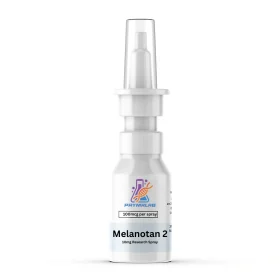
Melanotan II 10mg Nasal Spray
$89.99 or subscribe for $75.99/mo This product has multiple variants. The options may be chosen on the product page -
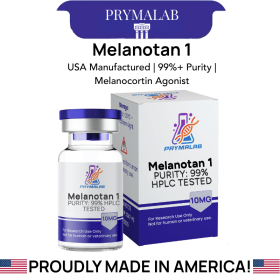
MT-1 (Melanotan 1) 10mg
$39.99 or subscribe for $32.99/mo This product has multiple variants. The options may be chosen on the product page -
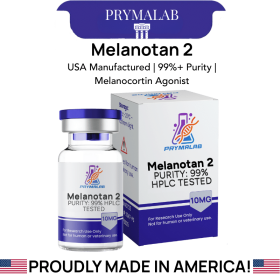
MT-2 (Melanotan 2 Acetate) 10mg
$33.99 or subscribe for $27.99/mo This product has multiple variants. The options may be chosen on the product page -
Sale!
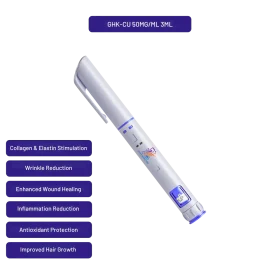
Preloaded Autoinjector | GHK-CU | 3ml Pen | 50mg/ml
Original price was: $89.99.$69.99Current price is: $69.99. -
Sale!
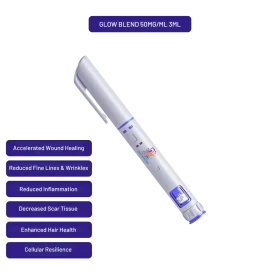
Preloaded Autoinjector | GLOW BLEND | 3ml Pen | 50mg/ml
Original price was: $199.99.$169.99Current price is: $169.99. -
Sale!
Preloaded Autoinjector | KLOW Blend | 3ml Pen | 80mg/ml
Original price was: $239.99.$199.99Current price is: $199.99. -
Preloaded Autoinjector | Melanotan 2 | 3ml Pen | 10mg
$69.99 or subscribe for $49.99/mo This product has multiple variants. The options may be chosen on the product page -
Preloaded Autoinjector | SNAP-8 | 3ml Pen | 10mg
$69.99 or subscribe for $59.49/mo This product has multiple variants. The options may be chosen on the product page -
Snap-8 10mg
$39.99 or subscribe for $32.99/mo This product has multiple variants. The options may be chosen on the product page
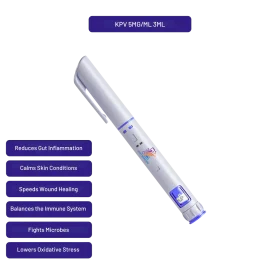
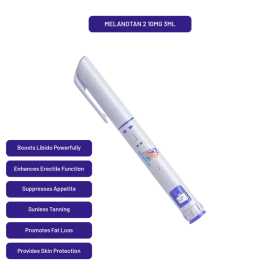
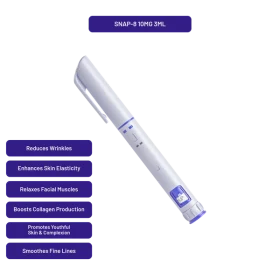
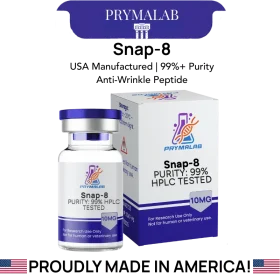
Four mechanistic classes · and the 500 dalton problem
Skin peptides are grouped as a marketing category and divide into four mechanistic classes that have very little in common. One class signals to fibroblasts. One carries a metal ion. One interferes with vesicle fusion at the neuromuscular junction. One inhibits degradative enzymes. This page sets out which compounds sit where, and why molecular weight decides whether any of it is reachable through intact skin at all.
Specification Table
| Property | Value |
|---|---|
| Class 1 | Signal peptides, fragments of matrix proteins that act on fibroblast synthesis |
| Class 2 | Carrier peptides, which deliver a bound metal ion to the site |
| Class 3 | Neurotransmitter-inhibiting peptides, which interfere with SNARE complex assembly |
| Class 4 | Enzyme-inhibiting peptides, which act on matrix metalloproteinases and related enzymes |
| Governing physical constraint | The 500 dalton rule for transdermal penetration of intact skin |
| Consequence of that constraint | Most peptides above roughly 500 daltons do not cross the stratum corneum in meaningful quantity |
| Compounds in this range under 500 daltons | GHK and GHK-Cu, at roughly 340 and 402 |
| Compounds in this range above it | KPV at roughly 358, palmitoylated signal peptides vary with the chain attached |
| Why palmitoylation is used | A lipid chain raises partition into the stratum corneum, addressing solubility rather than size |
| GHK-Cu copper stoichiometry | One copper ion per tripeptide, coordinated through the histidine imidazole and the backbone |
| Analytical note for copper complexes | A purity figure for the peptide does not establish that the copper is bound or that the ratio is correct |
| Page type | Category hub, not a product page |
| Schema page type | CollectionPage |
| Cornerstone content | Yes |
| Meta robots | index, follow |
| Regulatory status | No compound in this category holds an approved human or veterinary formulation |
What Are the Four Classes of Skin Peptides?
The classification in the dermatology literature divides these compounds by mechanism, and it is more useful than any grouping by application.
Signal peptides are short fragments of matrix proteins, most often collagen. The premise is that a fragment of a structural protein reads to a fibroblast as evidence that the protein has been broken down, and published work reports altered synthesis in cell culture in response.
Carrier peptides deliver a metal ion rather than acting as a signal in their own right. GHK-Cu is the example that dominates the class, carrying a single copper ion coordinated through its histidine residue.
Neurotransmitter-inhibiting peptides work at a different tissue entirely. They are modelled on the amino terminus of SNAP-25 and interfere with assembly of the SNARE complex that mediates vesicle fusion, which is the same target botulinum toxin acts on by a different route.
Enzyme-inhibiting peptides act on matrix metalloproteinases and related degradative enzymes, so their premise is preservation of existing matrix rather than synthesis of new material.
Those four mechanisms are independent. A compound in one class tells you nothing about how a compound in another will behave, and combining them does not produce a predictable sum.
Most listings in this market present them as one undifferentiated group of skin peptides, which is why the same claims get repeated across compounds that share no mechanism.
The class a compound belongs to is the first thing worth establishing, because it determines which published literature is relevant to it.
Why Does the 500 Dalton Rule Govern This Category?
A physical constraint sits underneath every topical application of these compounds, and it is quantitative rather than approximate.
The stratum corneum is a barrier of keratinised cells in a lipid matrix, and its function is to exclude things.
Bos and Meinardi set out what has since been treated as a working ceiling: compounds above roughly 500 daltons do not cross intact skin in meaningful quantity.
They arrived at the figure by observing that essentially every drug in common topical use falls below it, and that contact allergens, which by definition reach the immune system, do as well.
That ceiling is unforgiving for this category. GHK sits at roughly 340 daltons and its copper complex near 402, so both are under it. A pentapeptide is typically well above it.
Palmitoylation is the standard response. Attaching a lipid chain raises partition into the lipid matrix of the stratum corneum, which addresses solubility while adding mass rather than removing it.
Whether that trade works for any given compound is an empirical question, and the published evidence is thinner than the volume of product built on it suggests.
For laboratory work the constraint is manageable in a way it is not for a finished cosmetic, since cell culture and ex vivo skin models remove the barrier entirely or allow it to be measured directly rather than assumed.
What Makes Copper Peptides Analytically Different?
GHK-Cu is the most studied compound in this category and it introduces a verification problem no ordinary peptide has.
The compound is a complex rather than a modified peptide. A copper ion is coordinated by the histidine imidazole nitrogen and by backbone atoms, and the peptide and the metal are two separate things held together by that coordination.
A purity figure by reverse-phase HPLC reports on the peptide. It does not establish that copper is present, that it is bound rather than free in solution, or that the ratio is one to one.
Those are separate determinations. Copper content requires elemental analysis, and the coordination state shows up in the ultraviolet-visible spectrum as a characteristic absorbance near 620 nanometres that free copper and free peptide both lack.
A certificate reporting only HPLC purity for a copper complex has answered a question that was not the important one.
The complex is also sensitive to conditions in a way the free peptide is not. Freezing concentrates solutes and shifts local pH at the ice boundary, which is precisely the condition that dissociates the coordination.
pH matters for the same reason. The histidine imidazole has to be in the correct protonation state for the coordination to hold, so a formulation drifting acidic loses the complex without any visible change.
For anyone comparing suppliers of copper peptides, the ultraviolet-visible trace is the single most informative document, and almost nobody publishes it.
What Does the Published Record Actually Support?
The literature in this category is uneven, and being specific about where it is strong is more useful than a general endorsement.
GHK and GHK-Cu carry the deepest record. Work spanning several decades reports effects in cell culture and in animal wound models, and gene expression profiling has been published describing broad transcriptional changes.
That work is substantial and a large share of it originates with one investigator, which is a pattern worth noting rather than a disqualification.
The signal peptides have a narrower record. Cell culture data on matrix protein synthesis exists, and controlled work on intact human skin at realistic concentrations is much scarcer than the volume of product would imply.
The neurotransmitter-inhibiting class has the clearest mechanism and the weakest penetration case, since the compounds have to reach a target below the epidermis and their mass places them above the working ceiling.
Enzyme-inhibiting peptides are the least characterised of the four, and much of what circulates about them derives from in vitro inhibition assays rather than from any tissue-level measurement.
None of that makes the category uninteresting. It means that a study designed here should read the specific literature for the specific compound rather than the category summary, because the four classes are not equally supported.
Where a supplier cites research for skin peptides generally rather than for the compound in the vial, the citation is decorative.
How Do the Hair Compounds Differ?
Compounds grouped under hair in this category act on a different structure with a different cycle, and the grouping is by application rather than by mechanism.
The hair follicle is a mini-organ with a cyclical programme, moving between a growth phase, a regression phase and a resting phase, and the durations differ by body site and by species.
That cycling is what makes follicle work methodologically awkward. An observation depends on which phase the follicle population was in when the measurement was taken, and an unsynchronised population produces averaged data that can conceal opposite effects.
Copper complexes appear in this context as well as the skin context, with published work describing effects on follicle size in animal models.
The vitamin and cofactor blends stocked here are not peptides at all in most cases, and grouping them with peptide compounds is a merchandising decision rather than a mechanistic claim.
Species choice matters more than usual here. Rodent hair cycles are largely synchronised in waves across the body, while human follicles cycle independently of one another, so a rodent result does not transfer cleanly on timing.
Any study in this area needs a stated phase and a stated species before its numbers mean anything.
That requirement is rarely met in the material circulating about hair peptides, and its absence is the most common reason two sources appear to contradict each other.
Where a supplier presents follicle data without stating either variable, the figure is not wrong so much as uninterpretable, and that is the more common failure of the two.
Published Literature
Selected references on the classification, on the penetration ceiling and on the copper complex.
- Bos JD, Meinardi MM. The 500 Dalton rule for the skin penetration of chemical compounds and drugs. Exp Dermatol. 2000;9(3):165-169. https://doi.org/10.1034/j.1600-0625.2000.009003165.x
- Lupo MP, Cole AL. Cosmeceutical peptides. Dermatol Ther. 2007;20(5):343-349. https://doi.org/10.1111/j.1529-8019.2007.00148.x
- Pickart L, Margolina A. Regenerative and protective actions of the GHK-Cu peptide in the light of the new gene data. Int J Mol Sci. 2018;19(7):1987. https://doi.org/10.3390/ijms19071987
- Gorouhi F, Maibach HI. Role of topical peptides in preventing or treating aged skin. Int J Cosmet Sci. 2009;31(5):327-345. https://doi.org/10.1111/j.1468-2494.2009.00490.x
Frequently Asked Questions
What are skin peptides?
Short amino acid sequences studied for effects on skin tissue, divided in the dermatology literature into four mechanistic classes: signal peptides, carrier peptides, neurotransmitter-inhibiting peptides and enzyme-inhibiting peptides. The four share a category name and no mechanism.
What is the 500 dalton rule?
A working ceiling described by Bos and Meinardi, holding that compounds above roughly 500 daltons do not cross intact stratum corneum in meaningful quantity. It was derived from the observation that common topical drugs and contact allergens both fall below that mass.
Which compounds here fall under that ceiling?
GHK at roughly 340 daltons and its copper complex near 402 are both below it. KPV at roughly 358 is below it. Most pentapeptides and the palmitoylated signal peptides sit above it.
Why are signal peptides palmitoylated?
A lipid chain raises partition into the lipid matrix of the stratum corneum. That addresses solubility in the barrier rather than the size constraint, since the modification adds mass rather than removing it.
What is a carrier peptide?
A peptide whose function is to deliver a bound metal ion rather than to act as a signal itself. GHK-Cu is the dominant example, carrying one copper ion coordinated through its histidine imidazole and the peptide backbone.
Does an HPLC purity figure verify a copper peptide?
No. It reports on the peptide component only. It does not establish that copper is present, that it is coordinated rather than free, or that the stoichiometry is correct. Elemental analysis and a ultraviolet-visible absorbance near 620 nanometres address those separately.
Why must copper peptide solutions not be frozen?
Ice formation concentrates solutes and shifts local pH at the freezing boundary, which is the condition that dissociates the coordination. The complex can be lost with no visible change to the solution.
How do neurotransmitter-inhibiting peptides work?
They are modelled on the amino terminus of SNAP-25 and interfere with assembly of the SNARE complex that mediates vesicle fusion. The mechanism is clear and the penetration case is weak, since the target sits below the epidermis.
Which class has the strongest published record?
The carrier class, through GHK and GHK-Cu. Work spanning several decades covers cell culture, animal wound models and gene expression profiling, though a large share of it originates with a single investigator.
Why is hair follicle work methodologically difficult?
Follicles cycle between growth, regression and resting phases, and an observation depends on which phase the population occupied at measurement. An unsynchronised population yields averaged data that can conceal opposite effects.
Do rodent hair results transfer to human follicles?
Not on timing. Rodent hair cycles are largely synchronised in waves across the body while human follicles cycle independently, so phase and species both have to be stated before a figure carries meaning.
Are the hair blends in this category peptides?
Several are vitamin and cofactor formulations rather than peptide compounds. Their placement here reflects application rather than mechanism, and the distinction is worth checking on the individual product page.
Compliance Statement
Skin peptides are sold exclusively for laboratory research use. They are not a drug, food, or cosmetic product, and they are not a dietary product of any kind. They are not approved by the FDA or any comparable authority for human or veterinary use, the four mechanistic classes described here are supported by published literature to very different degrees, controlled work on intact human skin is scarce for most of them, and no compound in this category holds an approved human or veterinary formulation. These products are not intended to diagnose, treat, cure, or prevent any disease. They must not be given to humans or animals. Purchase is restricted to qualified researchers and institutions operating within applicable laws. All handling is the responsibility of the purchasing laboratory.
All 16 products in the Skin, Hair & Beauty Peptides range
Every listing states its quantity, concentration and format and carries a batch certificate of analysis. Products are supplied for laboratory research only.
- GHK-CU 50MG
- GHK-CU 50mg/ml preloaded 3ml pen
- GHK-CU 100MG
- GHK-Cu Nasal Spray
- GLOW BLEND 50MG
- GLOW BLEND 50mg/ml preloaded 3ml pen
- GLOW BLEND 70MG
- HHB Peptide (Healthy Hair & Nails Blend)
- KLOW Blend (80mg)
- KLOW Blend 80mg/ml preloaded 3ml pen
- Melanotan 2 10mg preloaded 3ml pen
- Melanotan II 10mg Nasal Spray
- MT-1 (Melanotan 1) 10mg
- MT-2 (Melanotan 2 Acetate) 10mg
- Snap-8 10mg
- SNAP-8 10mg preloaded 3ml pen